
Why Goal Setting Early Really Matters

Over the past almost three years coaching in Canada, I’ve had the privilege of working with many talented and motivated young athletes. One of the biggest challenges I see- across all sports- is not effort or ability, but clarity. Young athletes often work hard without really understanding what they are working towards or why.
That’s why I find the example of Shohei Ohtani (Los Angeles Dodgers) so powerful and genuinely inspiring.
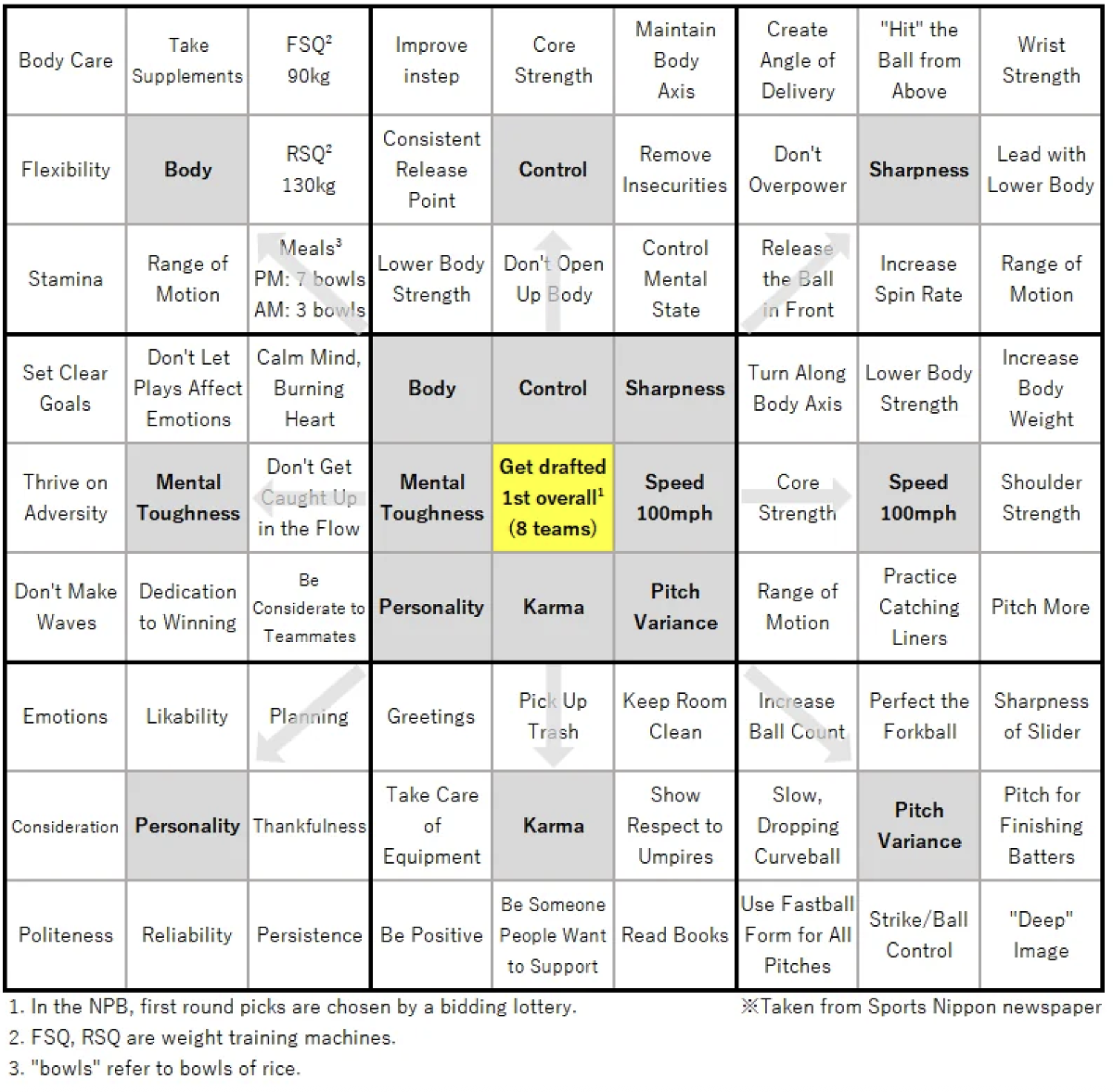
As a teenager in Japan, long before the MLB, Ohtani created a simple goal-setting chart. In the centre was one clear aim: “Get drafted first overall.” Around it, he wrote the habits, behaviours, skills, and personal standards he believed would be required to achieve that goal.
What’s important is not the goal itself- but how he thought about it.
What I Hope Swimmers Take From This
1. Focus on What You Can Control
Most of Ohtani’s goals had nothing to do with results. They were about daily behaviours:
• Looking after his body
• Being consistent and prepared
• Developing mental toughness
• Treating teammates and officials with respect
This is how long-term success is built- by doing the right things every day, even when no one is watching.
2. Being a Good Athlete Starts With Being a Good Person
Some of the most striking words on his chart are:
• Personality
• Thankfulness
• Karma
• Being someone people want to support
These are reminders that character matters. In my experience, athletes who develop these qualities not only perform better over time, but enjoy the journey more and stay in sport longer.
3. Bad Days Don’t Define You
Sport is full of ups and downs. Clear goals give athletes a way to handle disappointment:
• A tough race or competition doesn’t erase progress
• Effort and attitude still count
• Learning and persistence matter more than immediate results
This kind of mindset is especially important during the teenage years.
4. Responsibility Leads to Confidence
One thing to notice: none of Ohtani’s goals rely on coaches, selectors, or systems. They’re all about what he could do better.
When young athletes take responsibility for their preparation, behaviour, and effort, confidence grows naturally- because it’s earned.
A Message for Parents
If there’s one thing I’d encourage, it’s this:
Help your swimmer focus less on outcomes (times, rankings, selections) and more on daily habits, attitude, and effort (process).
Big goals are fine. But it’s the small, consistent actions that make them possible.
That lesson- more than any medal or result- is what stays with an athlete for life.
